Buying guide · Style
Men's Jacket Style Guide
The best-dressed men in Ireland are rarely the ones with the most jackets. They have a few good ones that fit, suit the weather and go with the rest of their clothes. This guide runs through the main styles, what each one says, how it should fit, what to wear it with and whether it can cope with an Irish year. Then it shows how to build a small outerwear wardrobe that covers most of it.
A quick word on fit
Every style below looks better when the shoulders fit. The seam should sit at the edge of your shoulder on structured jackets, and casual jackets should have a smooth line from neck to arm with no pulling. Beyond that, each style has its own ideal length and ease, which is covered under each heading. For the basics, start with how to choose a jacket that fits properly, and if you're unsure which cut suits you, read slim vs regular vs relaxed fit.
Everyday casual jackets
Bomber jacket
What it says: relaxed, a bit sporty, with roots in military flight jackets. In plain navy, black or olive it looks clean and modern.
Fit: short, finishing at the waist with a ribbed hem and cuffs. It should be snug at the hem and slightly fuller through the body, so the fabric blouses a little above the waistband. Avoid one that hangs below your belt.
Wear it with: jeans or chinos, a T-shirt, sweatshirt or fine-knit jumper, and trainers or plain boots.
Irish weather: fair weather to mild showers. Most bombers are nylon or cotton with little water resistance, and the short length leaves your trousers exposed. Good for dry spring and autumn days in town.
Harrington jacket
What it says: smart-casual and a little retro. It sits halfway between a bomber and a shirt, and it's one of the easiest jackets for a man to wear well.
Fit: waist length with a ribbed hem and cuffs, close but not tight through the chest. The collar should sit flat or stand up neatly.
Wear it with: a polo or Oxford shirt, chinos or dark jeans, loafers or desert boots.
Irish weather: a fair-weather piece. A cotton harrington with a water-repellent finish will shrug off a passing shower, but it isn't built for a wet commute.
Denim jacket
What it says: casual, durable and ageless. It works in your twenties and your sixties, as long as the fit is right.
Fit: finishes at or just below the belt. It should be close through the body without straining when buttoned, with sleeves ending at the wrist bone.
Wear it with: chinos, black or grey jeans (if you wear blue jeans, keep the shades clearly different), T-shirts, hoodies or a plain jumper underneath.
Irish weather: dry days only. Denim soaks up rain, gets heavy and takes ages to dry. Think of it as a summer and early autumn layer.
Overshirt and shacket
What it says: easy, practical, slightly outdoorsy. It's halfway between a shirt and a jacket and suits the many Irish days that are too mild for a coat.
Fit: shirt-like through the shoulders, with enough room to wear over a T-shirt or a thin jumper. The hem should cover your belt and stop around the top of your thigh.
Wear it with: a T-shirt or fine-knit jumper, jeans or chinos. A heavier wool or flannel overshirt also works as a mid layer under a rain shell.
Irish weather: good for mild dry days and indoors. On its own it won't keep out rain or wind, but under a shell it's a very useful layer.
Chore and field jackets
What it says: workwear heritage, practical and grown-up. A chore jacket is a boxy, hip-length cotton jacket with patch pockets. A field jacket is usually longer, with four pockets and sometimes a hood stowed in the collar.
Fit: a chore jacket is meant to be relaxed, so size for room over a jumper. A field jacket should cover your seat and have room for a fleece or light insulated layer.
Wear it with: a chore jacket suits jeans, a T-shirt or a plain crew-neck jumper. A field jacket works with almost anything casual, including heavier knitwear in winter.
Irish weather: a cotton chore jacket is a dry-day piece. A field jacket in a tightly woven or treated cotton handles showers better, and is a sound choice for walking the dog on a breezy afternoon.
Weather-ready jackets
Rain jacket
What it says: practical, and these days far less dated than it used to be. A plain rain jacket in a dark or muted colour, without too many logos or contrast zips, can look sharp.
Fit: room for a fleece or jumper underneath, sleeves that still cover your wrists when you reach up, and a hem that covers your seat. A city-style rain jacket can be a little neater and longer than a mountain shell.
Wear it with: almost anything casual. Over a jumper and jeans for the commute, over a fleece for a walk in Wicklow.
Irish weather: essential. If you only own one jacket, it should probably be this, or something that combines it with insulation. Read how to choose a waterproof jacket before you buy.
Parka
What it says: practical and unfussy, with a hint of military or mountain style. Few jackets suit an Irish winter better.
Fit: long enough to cover your seat, ideally to mid-thigh, with room for a thick jumper underneath. The hood should fit your head, not just look big.
Wear it with: jeans, chinos, heavy knitwear and boots. A slimmer, plainer parka can go over a suit for the office commute.
Irish weather: excellent, provided it's waterproof or at least highly water-resistant. A waterproof, lightly insulated parka covers most of an Irish winter on its own.
Puffer jacket
What it says: casual and warm. Short, glossy puffers look sporty; matte, hip-length ones in dark colours look more grown-up.
Fit: snug but not tight, so the insulation can loft. The hem should reach at least your belt, and the sleeves should reach the base of your thumb.
Wear it with: jeans or chinos and a jumper, or as a layer under a shell when it's very wet.
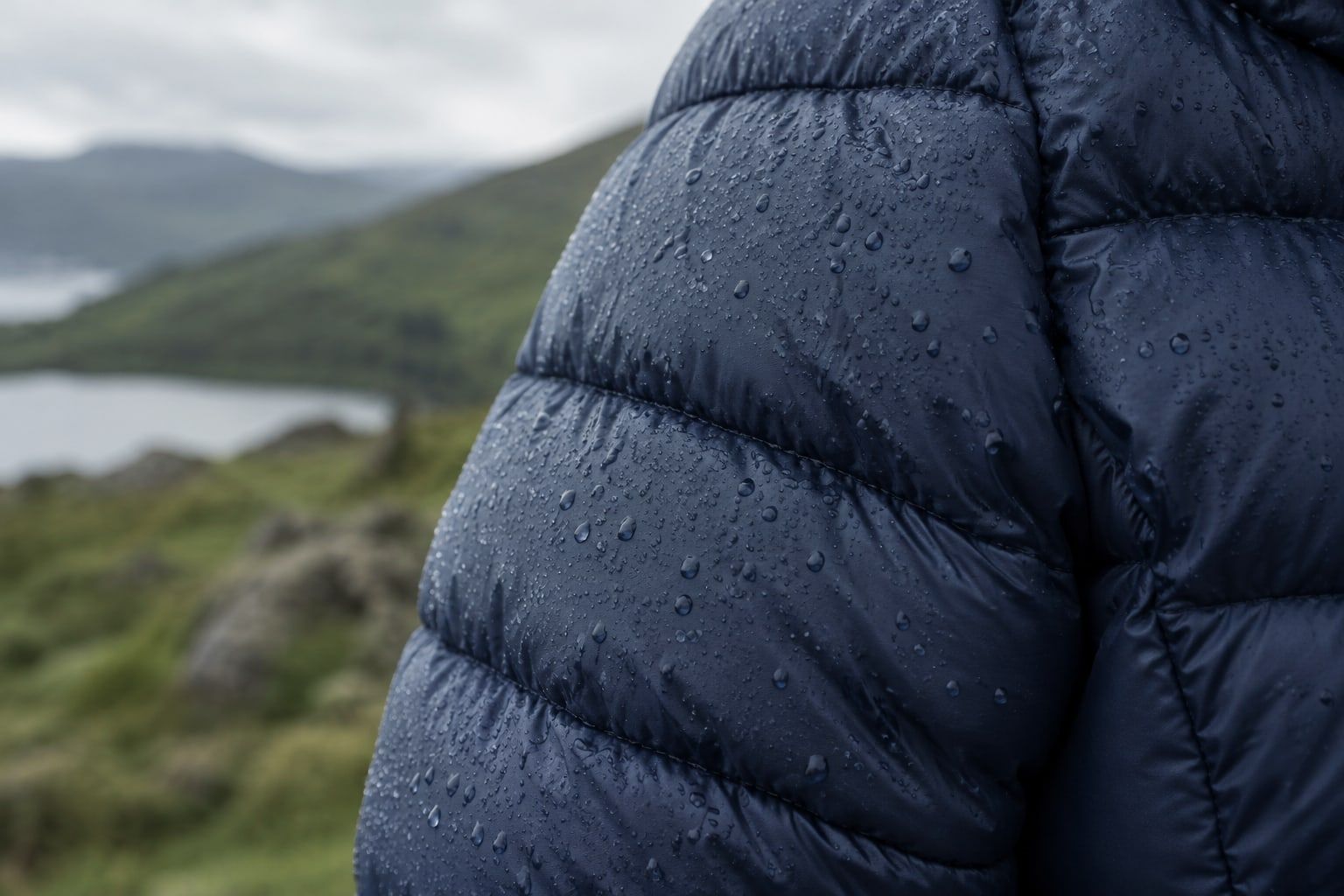
Irish weather: good for cold dry days and sideline duty at a GAA match. On wet days, choose synthetic insulation or a water-resistant shell, and see our guide to down vs synthetic jackets for why it matters.
Quilted jacket
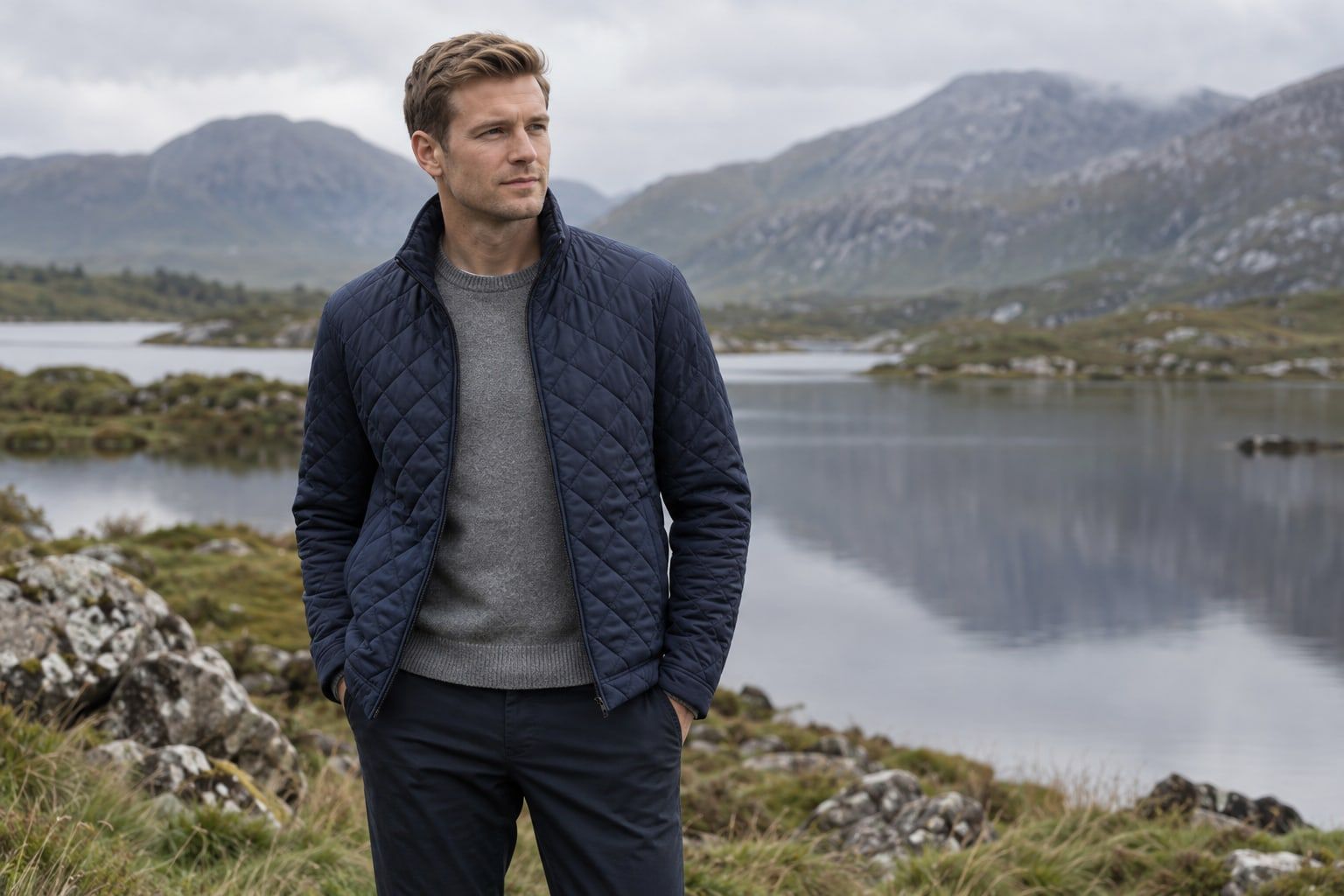
What it says: country, smart-casual and a little classic. A slim quilted jacket in navy or olive is one of the most versatile pieces a man can own.
Fit: fairly close, with room for a jumper. It should finish just below your hips, with a cord or corduroy collar that sits flat.
Wear it with: almost anything: over a jumper with jeans, over a shirt with chinos, or even over a blazer for a smart-casual lunch.
Irish weather: good for cool, dry or lightly damp days. Most quilted jackets are water-resistant rather than waterproof, so on a properly wet day you'll want a rain jacket instead.
Waxed jacket
What it says: rural, traditional and characterful. A waxed cotton jacket looks better as it ages and picks up creases.
Fit: generous enough for a jumper or fleece, usually hip to thigh length. It should feel roomy rather than tight.
Wear it with: jeans, cords, knitwear and leather boots. Avoid it over smart office wear, as the wax can mark lighter fabrics.
Irish weather: very good in wind and steady rain once properly waxed, and it suits a wet walk on the Wild Atlantic Way well. It needs re-waxing every year or two, it can feel heavy, and it doesn't breathe well if you're moving fast.
Smart outerwear
Overcoat
What it says: polished and serious. A wool overcoat in navy, charcoal or camel is the most elegant thing most men will wear.
Fit: the shoulders matter most, so the seam should sit at your shoulder bone with room for a suit jacket underneath. Length should be at or just below the knee. Sleeves should end just past the wrist so your shirt cuff only shows when you reach.
Wear it with: a suit, or a jumper and smart trousers. In winter it's the natural choice for a funeral, a wedding in December or an evening out.
Irish weather: fine in cold and light drizzle, but wool absorbs heavy rain and gets heavy. Carry a good umbrella.
Car coat
What it says: smart but relaxed. It's a shorter coat, usually ending at mid-thigh, designed to be easy to sit and drive in.
Fit: like an overcoat at the shoulders, but shorter and a little straighter. It should close comfortably when you're seated.
Wear it with: chinos, smart jeans, knitwear or a blazer. It suits office-casual dress very well.
Irish weather: fairly practical, since the shorter length is easier on the commute. Wool versions behave like an overcoat in rain; those in cotton gabardine or with a water-resistant finish cope better.
Peacoat
What it says: naval heritage, strong and a little preppy. Its heavy wool, double-breasted front and wide collar make it a warm, structured coat.
Fit: finishes around the top of the thigh and should be close-fitting through the chest. With a double-breasted coat, make sure it closes without pulling across the buttons over a jumper.
Wear it with: knitwear, jeans or chinos and boots. It suits casual winter dress better than a suit.
Irish weather: warm and wind-resistant, with that collar turned up against a bitter easterly. Like any wool coat, it's not for heavy rain.
Trench coat
What it says: classic and city-smart. A trench in stone, navy or olive suits the changeable weather of an Irish spring or autumn.
Fit: room for a suit jacket or jumper, with a belt you can tie or leave loose. Length ranges from just above to just below the knee; shorter trenches suit shorter men better.
Wear it with: a suit, or a jumper with chinos and leather shoes or boots.
Irish weather: good for mild, showery days. Tightly woven cotton gabardine resists light rain, and some modern trenches have a waterproof membrane. On a cold day it needs a jumper underneath.
Colour: choose for versatility
If you want jackets that go with everything, stick to a small range of colours.
- Navy is the most versatile. It works with blue jeans, grey, stone and green, and it looks smart and casual at once.
- Olive and dark green suit the Irish landscape and pair well with denim, grey and brown.
- Charcoal and black are smart and easy, though black can look severe in daylight and shows lint.
- Stone and camel are lighter and work well on spring and autumn coats, but show mud and marks. They make a good second coat rather than your daily jacket.
Save brighter colours for rain jackets and outdoor shells, where visibility on the hills or on a bike is useful. A bright red or yellow shell in a city is perfectly fine too, as long as your other jackets are quieter.
Building a small, practical outerwear wardrobe
For most of an Irish year, two or three jackets cover almost everything.
The two-jacket version
- A waterproof everyday jacket in navy, olive or charcoal, with room for a jumper or fleece underneath. This covers rainy commutes, school runs and weekend walks from autumn to spring.
- A warm winter layer, such as a quilted jacket or a mid-weight puffer, which works alone on cold dry days and fits under the waterproof on cold wet ones.
The three-jacket version
Add a smarter coat: a wool overcoat, car coat or trench, for work, evenings and occasions. Navy or charcoal will go with every suit you own.
Adding a fourth
If you have room, a fair-weather jacket such as a harrington, chore jacket or denim jacket rounds things out for the dry days of late spring and summer. A light, packable rain shell is also handy for the jacket that lives in the car or in your bag for travel.
For more on matching jacket types to specific Irish conditions, see best types of jackets for Irish weather and browse our men's jackets.