Buying guide · Care
Do Waterproofing Sprays Work? How to Re-proof a Jacket
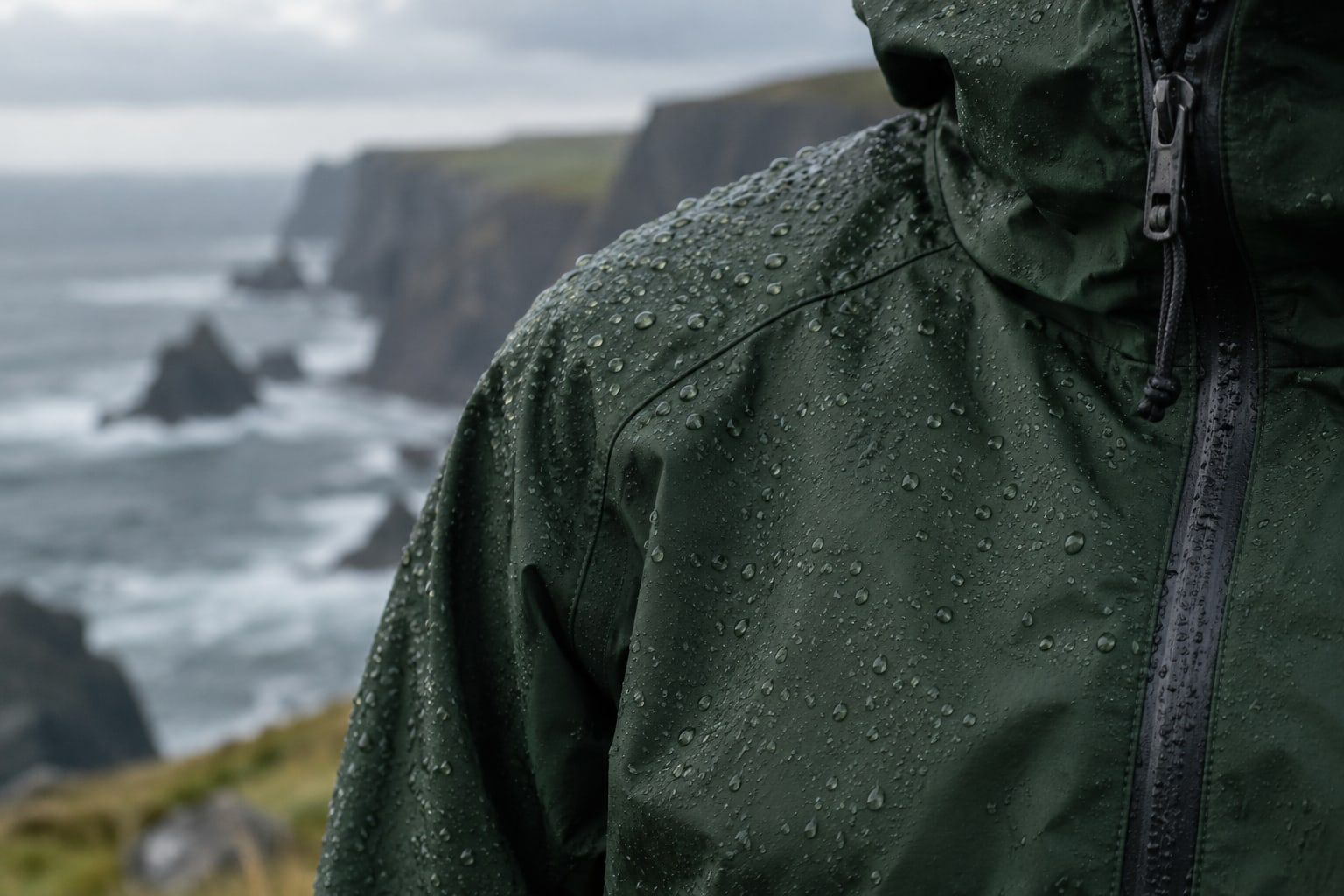
Most waterproof jackets don't fail all at once. They fade. Rain that used to bead and roll off starts to soak into the shoulders, the fabric goes dark and heavy, and by the time you get to work your arms feel damp. Many people take that as a sign the jacket is finished and buy a new one.
Often it isn't finished at all. What has worn off is the water-repellent finish on the outside, and that is exactly what waterproofing sprays and wash-in proofers are made to restore. Used properly, they work. Used on the wrong jacket, or on a dirty one, they disappoint.
What a waterproofing spray actually does
A waterproof jacket keeps you dry with two separate things working together.
- The waterproof layer: a membrane or coating on the inside of the fabric, plus taped seams. This is what physically stops water getting through.
- The water-repellent finish, usually called DWR (durable water repellent): a treatment on the outer fabric that makes rain bead up and roll away.
Waterproofing sprays, despite the name, only restore the second one. They put a fresh water-repellent finish on the face fabric. They don't add a membrane, seal seams or patch holes.
So why does the finish matter if the membrane is still there? Because when the DWR wears off, the outer fabric soaks up water. This is called "wetting out". The jacket is still technically waterproof underneath, but a layer of cold water now sits across the membrane. You feel chilly, the jacket gets heavy, and the membrane can no longer let your sweat escape, so you get damp from the inside. Most "my jacket is leaking" complaints are really wetting out plus condensation.
Restore the finish and the outer fabric sheds water again, the membrane can breathe, and the jacket feels like it used to.
When a proofer will help
- A waterproof jacket that has started wetting out. This is the main job, and the one where proofers make the biggest difference.
- A softshell, windproof or water-resistant jacket. A fresh finish improves how well it shrugs off showers, which is useful for the dash between car and shop or a dry-ish walk.
- Rain trousers, hats and gaiters. Same principle: they wet out at the knees and seat first.
- A jacket that still beads water in some places but not others. The shoulders, cuffs and anywhere a rucksack strap rubs wear first. You can spray just those areas.
When it won't help
- Leaking seams. If water comes through in a line along the shoulders or hood, the seam tape has probably lifted. A spray won't fix that. Seam sealer can, if the tape is only lifting in places.
- A damaged membrane. If the inside of the jacket is flaking, peeling or crinkly, the coating or membrane has broken down. No proofer will bring it back.
- A fashion jacket with no waterproof layer. A cotton, wool or polyester jacket with no membrane will repel a passing shower better after proofing, but steady Irish rain will still get through. Spraying it doesn't turn it into a rain jacket. See how to choose a waterproof jacket if you need the real thing.
- A dirty jacket. This is the most common reason proofing "doesn't work", and it's covered next.
How to tell whether your jacket needs re-proofing
Lay the jacket flat and sprinkle some water on the shoulders and sleeves, or wear it out in a shower and look at it when you come in.
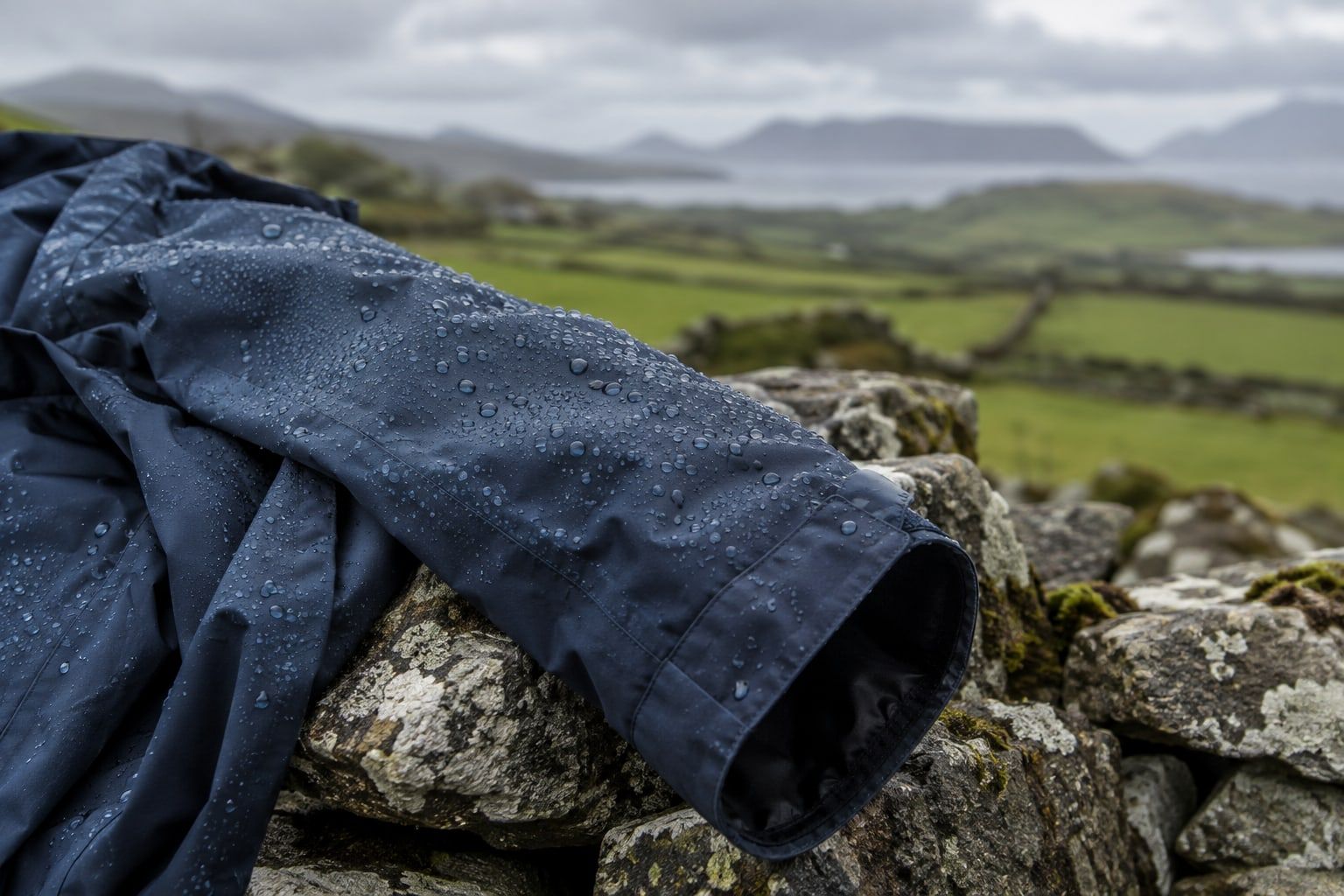
- Water forms tight beads and rolls off: the finish is fine. Leave it alone.
- Water spreads out and leaves dark patches: the fabric is wetting out. Wash it first, then test again.
- Still wetting out after a wash and some gentle heat: now it needs re-proofing.
That middle step matters. A surprising number of jackets don't need proofing at all, just a proper wash.
Wash first: the step most people skip
DWR stops working when it is coated in dirt, sweat, sun cream, smoke and body oils. Spraying a fresh finish on top of that grime means it can't bond to the fabric, so it wears off quickly and looks patchy.
- Empty the pockets, close every zip and fasten the cuff tabs.
- Wash on a gentle, cool cycle with a technical cleaner made for outdoor clothing. Ordinary detergent and fabric conditioner leave residues that attract water, which is the opposite of what you want.
- Give it an extra rinse.
- Apply gentle heat if the care label allows: a low tumble dry, or a cool iron through a towel or cloth.
Heat helps reactivate the existing finish. Do the splash test again afterwards. If the water beads, you're done.
Spray-on or wash-in?
Both kinds restore a water-repellent finish. The difference is where it ends up.
| Spray-on | Wash-in | |
|---|---|---|
| Where it goes | Only the outside, where you spray | The whole garment, inside and out |
| Best for | Waterproof jackets with a membrane, especially with a mesh or fabric lining | Fleeces, softshells and single-layer garments with no lining |
| Control | You can target worn areas | Even coverage, no missed patches |
| Downside | Takes longer and needs good ventilation | Can coat the inner lining and reduce breathability on membrane jackets |
For most waterproof jackets, a spray-on proofer is the better choice. You want the outside to repel water and the inside to keep wicking moisture away from you. A wash-in product coats both, which can make a breathable jacket feel clammier.
How to re-proof a jacket, step by step
- Wash the jacket as above. Proofer goes on a clean garment, ideally while it is still damp from the wash.
- Hang it up outdoors or in a well-ventilated room, on a hanger, with all zips closed.
- Spray evenly from the distance given on the label, working in sections. Give extra attention to the shoulders, hood, cuffs, forearms and anywhere straps rub.
- Wipe off any drips or runs with a clean cloth so the finish doesn't dry blotchy.
- Leave it to dry fully, following the product's instructions.
- Apply heat if the product says so. Some proofers need heat to set, others are designed to dry at room temperature. Check before you tumble dry.
- Do the splash test. If some patches still wet out, give them a second light coat.
Fabrics that need something different
- Waxed cotton jackets are proofed with wax, not spray. Re-waxing every year or so, warming the wax and working it into the fabric, is what keeps them shower-proof.
- Leather and suede need a product made for leather. A general textile proofer can stain or stiffen them.
- Down puffers can be proofed on the outer fabric with a spray to help them handle showers, but use a down-specific wash and avoid getting proofer into the fill. Our down vs synthetic guide explains why damp down loses warmth.
- Wool coats have some natural water resistance. If you want more, choose a product that says it is suitable for wool and test it on a hidden area first.
- Cotton canvas and denim take a proofer reasonably well for showers, but remember the limit: repellent, not waterproof.
PFC-free proofers
Older water-repellent finishes, both factory-applied and in proofing products, used fluorocarbons (PFCs), which are very effective but persist in the environment for a very long time. Most outdoor brands and proofer makers have moved to PFC-free alternatives, and restrictions on these chemicals are tightening in Europe.
PFC-free finishes work well, but they are generally less resistant to dirt and oils. In practice that means two things: wash your jacket more often, and expect to re-proof a little sooner than you might have done with an older jacket. Neither is a reason to avoid them.
How often should you re-proof?
There is no fixed schedule. It depends on how much you wear the jacket and how hard you are on it. A jacket worn daily for walking to work and the school run through an Irish winter might need a wash every few weeks and a re-proof once or twice a season. A hillwalking jacket that spends long days under a rucksack will wear faster at the shoulders. A spare that lives in the boot of the car may go a couple of years.
Let the splash test decide. Wash when it starts wetting out; re-proof when washing alone no longer brings the beading back.
Is it worth doing?
For a good waterproof jacket, almost always. A wash and a re-proof cost far less than a replacement and can add years to a jacket that still has a sound membrane and seams. It is also the single best thing you can do to make an older jacket feel comfortable again, because restoring the finish restores breathability as well as repellency.
Where it isn't worth it is a jacket with peeling inner coating, failed seams it would cost more to fix than replace, or a jacket that was never waterproof in the first place and is being asked to do a rain jacket's job. In those cases, our guides to waterproof jackets and the best types of jackets for Irish weather will help you choose the right replacement.