Buying guide · Essentials
The Ultimate Jacket Buying Guide for Ireland

Buying a jacket in Ireland is mostly about rain, wind and mild damp cold, in roughly that order. Our weather comes in off the Atlantic, rarely gets very cold, and changes fast. Met Éireann figures put the number of wet days at roughly 150 a year in the east and up to 225 in the west, so a jacket that only works when it's dry is a jacket you'll leave on the hook more often than you'd think.
This guide walks through the main types of jacket, what each one is genuinely good for here, and a simple way to work out which one you need.
Start with how you'll actually use it
The most common mistake is buying for the photo rather than the week. Before you look at any jacket, picture an ordinary Tuesday in November and answer three things honestly.
- How long are you outside at a stretch? Ten minutes from car park to office is a different job from a 40 minute walk to work or two hours on the sideline at an underage match.
- How active are you while you're out? Standing still needs insulation. Walking briskly, cycling or hillwalking needs breathability, because you'll make your own heat.
- What happens if it rains properly? If the answer is "I'll get the bus" or "I'm in the car anyway", water resistance may be enough. If the answer is "I'm still walking the dog", you need a jacket that is fully waterproof.
Those three answers will rule out half the options on their own.
The main jacket types, and what they're good for in Ireland
Rain shell
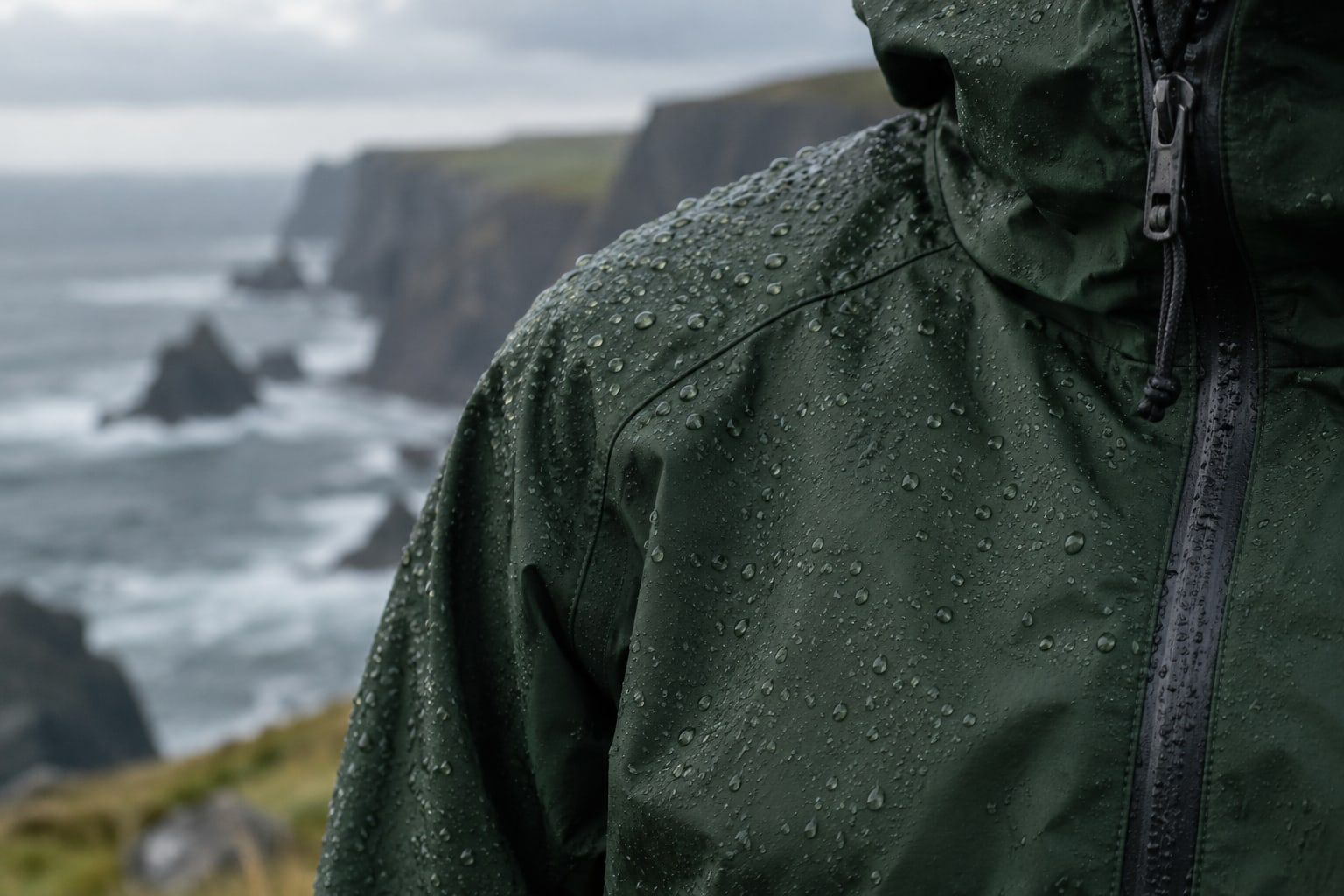
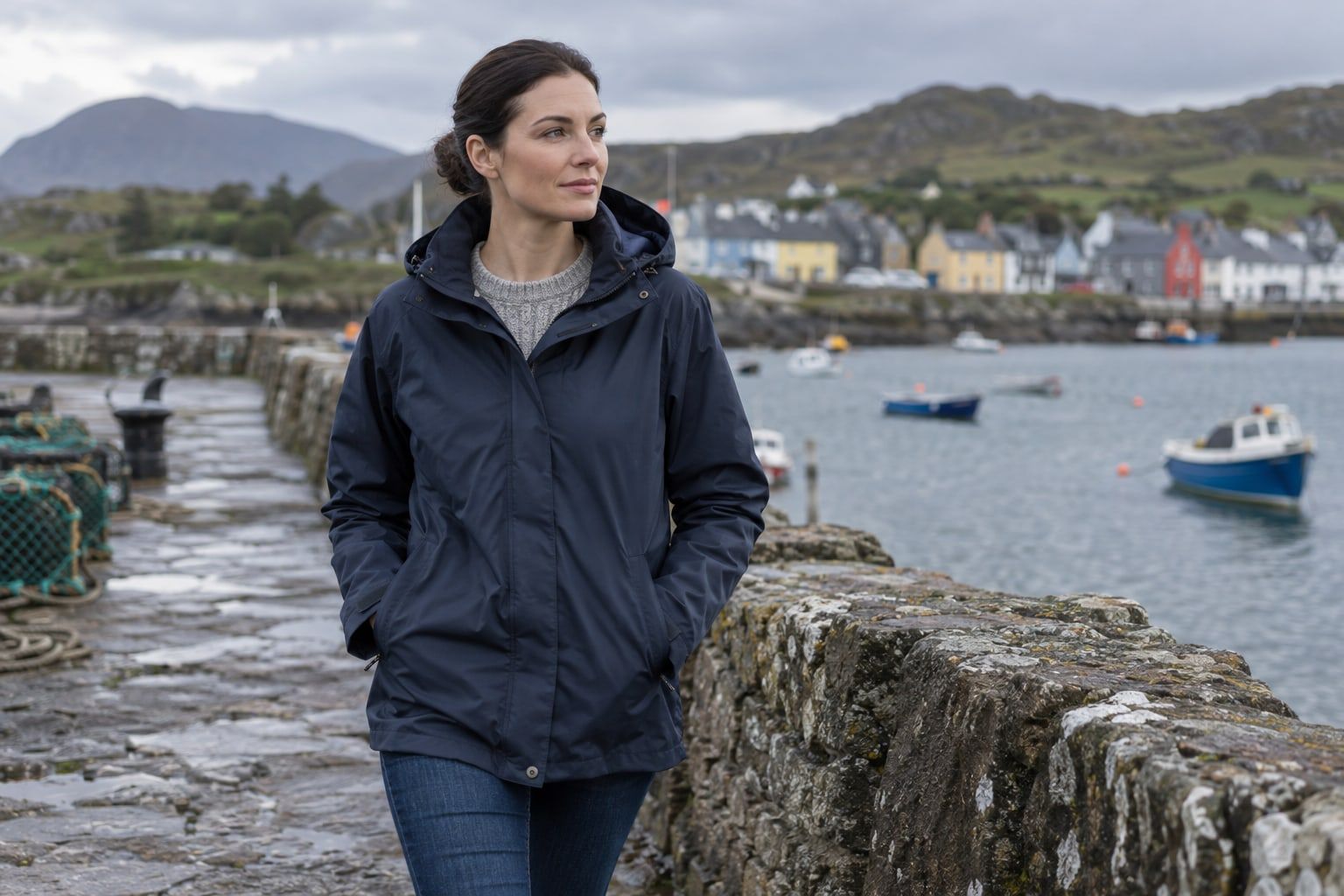
A rain shell is a thin, unlined or lightly lined waterproof jacket with taped seams and a proper hood. It provides no warmth of its own, which is exactly the point: you add a jumper or fleece underneath when it's cold and wear it over a T-shirt when it's 15°C and drizzling.
For Irish conditions this is the most useful single garment you can own. It handles showers, wind and steady rain, packs small, and works for commuting, walking and hillwalking. See our waterproof jacket guide for how to judge one properly.
Insulated waterproof jacket
This is a waterproof outer with insulation built in, either padded throughout or with a fixed fleece or quilted lining. It's the classic "one coat for the winter" and makes sense if you're outside a lot in cold rain and want to put on one thing and go.
The trade-off is flexibility. On a mild, wet day in October it can be too warm, and you can't take the warmth out.
Puffer
A puffer is a quilted jacket filled with down or synthetic insulation. It is very warm for its weight and lovely on a dry, cold, still day. The outer fabric is usually water-resistant at best, and the stitched seams between the quilted sections let water and wind through.
In Ireland a puffer works best on crisp winter days, under a shell on wet cold ones, or for people who move between car and building. Synthetic fill copes with damp far better than down. Our down vs synthetic guide covers that choice in detail.
Fleece
A fleece is warm, light, breathable and still insulates when damp. It does very little against wind and nothing against rain. Think of it as a mid layer that sometimes gets promoted to outer layer on a dry autumn evening, rather than a jacket in its own right.
Softshell
Softshells are stretchy, wind-resistant, water-repellent jackets, often with a brushed inner face. They breathe far better than waterproofs and are comfortable for active use: cycling, running, hillwalking on a dry, breezy day. They will shrug off a passing shower but will soak through in steady rain, so they suit the east more than a wet day in Connemara.
Parka
A parka is a longer, hooded jacket, usually insulated, often finished with a fur-effect hood trim. The length covers your backside and upper thighs, which matters on a cold sideline or bus stop. Some parkas are fully waterproof with taped seams and some are only shower-resistant, so check the label rather than assuming.
Waxed cotton
Waxed cotton jackets are dense cotton treated with wax so that rain beads and runs off. They're tough, they suit the countryside and they age well. In steady rain they can eventually let water in at the seams and shoulders, they need re-waxing every season or so, and they're heavy and not very breathable.
They're a good choice for farm, field and dog walk where thorns and mud would shred a lightweight shell. They are a poor choice for cycling to work.
Wool overcoat
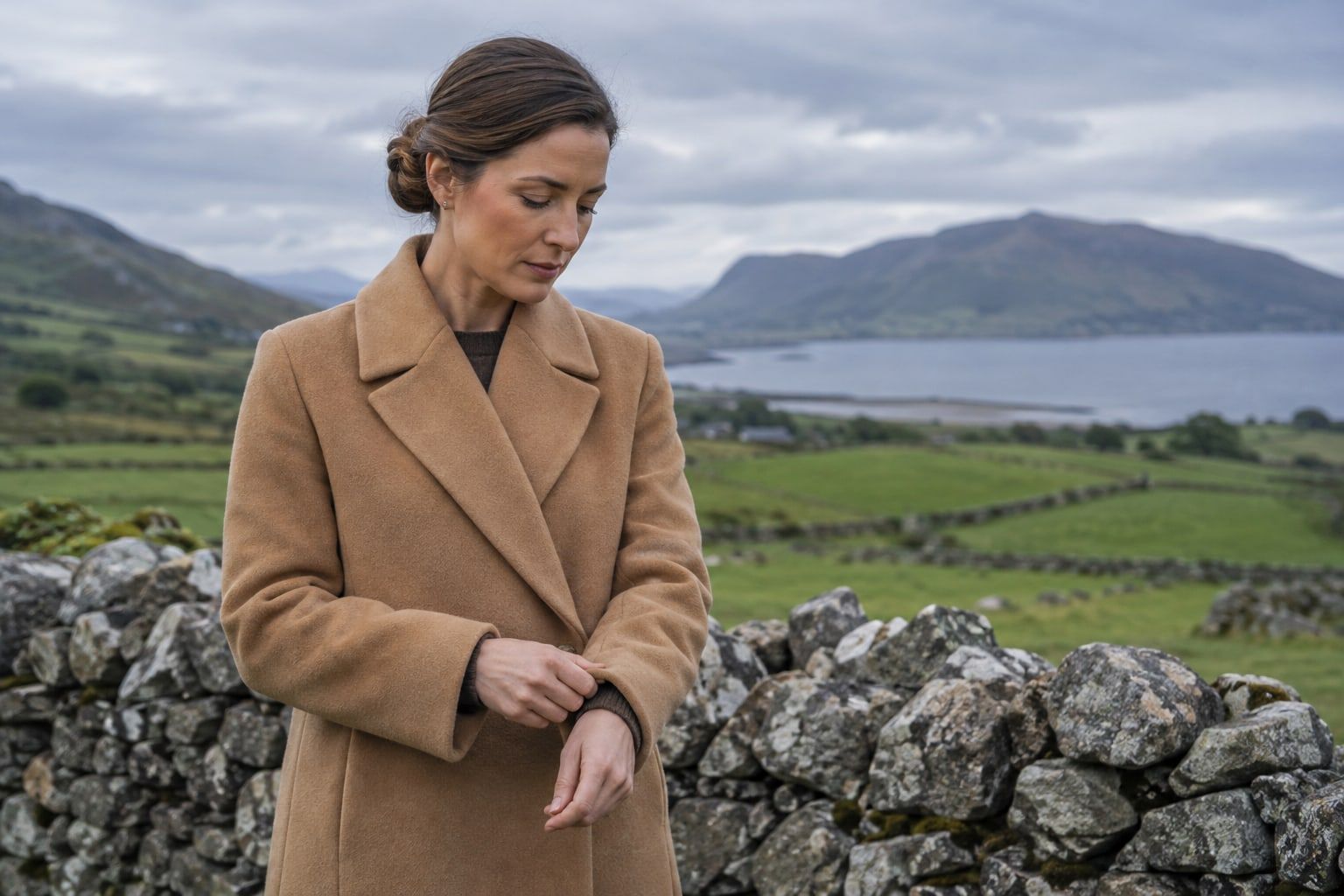
A wool overcoat is the smart option for the office, a funeral, Mass or a winter wedding. Wool keeps you warm when damp and copes with drizzle better than most people expect. A proper downpour will soak a wool coat through, and a wet wool coat is heavy and slow to dry, so pair it with an umbrella or a packable shell for bad days.
Bomber
A bomber is a short, zip-front jacket with ribbed cuffs and hem. It's a casual, smart-ish layer for spring and autumn evenings. Some are padded, a few are water-resistant, but most offer little against Irish rain and the short length leaves your lower back exposed to wind.
Denim and casual jackets
Denim, cord, chore and overshirt-style jackets are style pieces for dry days. Denim in particular is miserable when wet: heavy, cold and slow to dry. Wear them happily on a bright April afternoon, but don't make one your main jacket.
Trench coat
The trench was designed as a shower coat, traditionally in tightly woven cotton gabardine. A good one handles city showers and wind well and looks right over a suit or smart dress. Most aren't fully waterproof, though some modern versions hide a waterproof membrane, so read the description carefully.
At a glance
| Jacket type | Rain | Warmth | Best Irish use |
|---|---|---|---|
| Rain shell | Waterproof | None (layer under) | Almost everything |
| Insulated waterproof | Waterproof | Medium to high | Cold, wet days outdoors |
| Puffer | Light showers | High | Dry cold, or under a shell |
| Fleece | Poor | Medium | Mid layer |
| Softshell | Showers | Low to medium | Active use on dry, windy days |
| Parka | Varies | High | Standing about in winter |
| Waxed cotton | Good, not perfect | Low to medium | Countryside, dog walks |
| Wool overcoat | Drizzle | Medium to high | Office, formal occasions |
| Bomber, denim | Poor | Low | Dry days, evenings |
| Trench | Showers | Low | City, smart wear |
A simple way to decide
Work through these in order and stop when you have an answer.
- If you're outside for more than 20 minutes most days, in any weather, you need something fully waterproof. Choose a shell if you're active or want flexibility, or an insulated waterproof if you mostly stand or stroll.
- If you mainly go from car to door, a puffer, wool overcoat or water-resistant parka will do, and you can choose more on looks.
- If you walk fast, cycle or hillwalk, prioritise breathability: a good shell for wet days, a softshell or fleece for dry ones.
- If you need to look smart, a wool overcoat or trench, plus a packable shell in the bag for genuinely bad days.
- If you already own a decent waterproof, your next jacket can be the fun one.
For condition-by-condition advice, our guide to the best jackets for Irish weather goes further.
Fashion jacket or weather-resistant outerwear
Plenty of jackets look technical without doing the technical work. A hood, a toggle and a matte nylon fabric don't make a jacket waterproof. The difference is in the construction: a waterproof fabric or membrane, seams sealed with tape on the inside, and closures designed to keep water out.
Reading the label is the quickest test. "Waterproof" with "taped seams" is a real claim. "Water-resistant", "showerproof" or "water-repellent" means it will cope with a short shower and not much more. If the product description talks only about style and fit and says nothing about seams or a waterproof rating, assume it's a fashion jacket.
There's nothing wrong with a fashion jacket. It just needs to be your second jacket in Ireland, not your only one.
Materials in brief
- Nylon and polyester: the base of most technical jackets. Light, quick-drying, and only waterproof when combined with a membrane or coating.
- Waterproof membranes: thin films such as Gore-Tex or eVent, or own-brand equivalents, bonded behind the outer fabric. They block liquid water while letting some sweat vapour escape.
- PU coatings: a cheaper way to make fabric waterproof. They work, but they're usually less breathable and can wear over time.
- Cotton: comfortable and quiet, but it absorbs water unless it's waxed or very tightly woven.
- Wool: warm when damp, naturally odour-resistant, heavy when soaked.
- Down and synthetic insulation: down is warmer for its weight, synthetic keeps working when damp. Both need a weather-resistant outer to cope with Irish rain.
Features worth paying for, and the gimmicks
The features that make a real difference on an Irish day are not always the ones in bold on the swing tag.
Worth paying for
- A hood that moves with your head. An adjustable hood with a stiffened peak keeps rain off your face and lets you turn to check traffic.
- Fully taped seams on anything sold as waterproof.
- Adjustable cuffs and a hem drawcord, so wind doesn't blow up the back or rain run down your wrists.
- A storm flap or water-resistant zip on the front.
- Pit zips if you walk fast or hillwalk. They let heat out without opening the front to the rain.
- Hand pockets placed above a rucksack hip belt if you carry a bag a lot.
- A decent length. A jacket that covers your backside keeps you much drier on a wet walk than a waist-length one.
Usually gimmicks
- Endless internal pockets you'll never use.
- Headphone ports and cable loops.
- Decorative zips and toggles that add weight and catch on things.
- Very high waterproof numbers on a jacket you'll only wear to the shop. A 20,000mm rating is wasted on a ten minute walk, and you may be paying for stiffness and weight you don't need.
Value and cost per wear
A good jacket is one of the few pieces of clothing you might wear most days for half the year. That changes the maths. A €250 waterproof worn 150 days a year for five years works out at about 33 cent a wear. A €60 jacket that leaks and gets replaced every winter costs more over the same period and spends five years letting you down.
That doesn't mean the most expensive jacket is the best value. You're paying for the features you'll use. A commuter who walks 15 minutes each way doesn't need a mountaineering shell built for Kerry ridges in a gale. A hillwalker who's out every weekend probably does.
Value also depends on fit. A jacket that's tight across the shoulders or too short in the arms will get left at home, whatever it cost. Our guide on how to choose a jacket that fits and the fit guide on room for layering are worth a look before you spend serious money.
One jacket or two?
For many people in Ireland, the honest answer is one very good jacket and a few layers, or two jackets that do different jobs.
Option one: a waterproof shell plus layers
A good shell with a fleece, a light puffer or a wool jumper underneath covers almost every Irish day. On a mild, wet September morning you wear the shell over a T-shirt. On a cold, dry January afternoon you add a fleece. On a raw, wet day in February you wear both and stay dry and warm.
This is the most flexible set-up and the best for active people, because you control the warmth. The downside is a bit of faff, and it doesn't look as polished as a single coat.
Option two: a waterproof insulated jacket
One coat with warmth built in is simpler. You put it on, you zip it up, you're done. It suits people who stand about more than they walk: parents on the school run, spectators at a GAA match, anyone waiting at a bus stop on a dark evening.
The cost is flexibility. From April to October it's often too warm, so you'll probably still want a lighter jacket for the warmer half of the year.
Which is right for you
If you walk, cycle or hillwalk, choose the shell and layers. If you mostly stand, wait or stroll in winter, choose the insulated waterproof, and add a light shell later for summer. Either way, the jacket that does the heavy lifting should be genuinely waterproof, because in Ireland the rain is the one thing you can count on. Browse the waterproof jackets and winter jackets sections to see what each looks like in practice.